Taught by Profs. Pia Kleber, Doug Eacho and David Rokeby
This interdisciplinary graduate course explores the collision between the performing arts and recent developments in computational media. Students will be introduced to the activity of BMO Lab, a home for collaborative creative research across the arts and sciences, through workshops emphasizing practical engagement with in-progress tools and ideas, as well as seminar discussions of theoretical and historical writing that inform the Lab’s work. Central themes of investigation will include machine learning, machine vision, artificial intelligence, motion capture, and theatrical control.
In the past, this course has been structured around the Lab as a physical space, and has taken up many technologies that rely on shared copresence. COVID-19 has necessarily shifted the nature of this course: presumably for the full term, students will participate in the course over Zoom. Though we will accordingly discuss Zoom in class, this is not a class in so-called Zoom theatre. Rather, we will work with and against Zoom to pursue performance experiments whose ultimate concern is the material stage, not the LCD screen. There are some technological-performative concepts that we will have to talk about and simulate, but cannot fully execute in a distanced course session; many readings are intended to open up those conversations. That said, this course remains a studio class, and creative participation from all will be central to our success.
BMO Lab and Canadian Stage sponsored a group of professional theatre artists to pursue experimental performance research and development. These artists participated generously in the course.

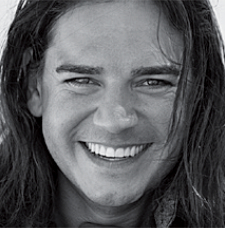


Although the class was taught entirely remotely this opened up other opportunities. For example, the class was able to have zoom dialogues with renowned directors Robert Wilson and Robert Lepage.


We did as much engaged experimenting as possible given the limitations of zoom. For example, David Rokeby put together a system that would capture the individual panels of the zoom screen and allow for real-time processing and reconfiguring of zoom


In addition to zoom itself, the class explored AI text generation, including a system where a performer can dialogue with the AI generator (memorably enlivened by Maev Beaty’s virtuoso performance with AI generated text based on the plays of Rick Miller). This lead to extensive discussion of the way that a live performer can knit meaning into the well-structured but fundamentally intention-less and meaningless banter of an artificial intelligence system, and also around the ways that such an AI steals voices, resulting in what might be considered a kind of AI-driven verbal black-face.
We also explored the ways that technology can provide greater agency for performers, and change the role of stage manager and director in positive and negative ways
We also looked at motion capture from several different angles, trying to so understand the possibilities and difficulties this technology poses for performers.
Schedule
Jan 11 – Course Introduction
Readings:
none
Jan 18 – Zoom
Workshop:
Real-time Zoom manipulation
Readings:
Shane Denson. “‘Thus isolation is a project.’ Notes toward a Phenomenology of Screen- Mediated Life.”
Guilherme da Silva Machado. “Zoom in on the Face: The Close up at Work.”
Both in Pandemic Media, ed. Philipp Dominik Keidl, Laliv Melamed, Vinzenz Hediger, and Antonio Somaini. Goethe University Frankfurt, 2020.
Jan 25 – What Can a Machine Learn?
Workshop:
Performing a neural net
Readings:
James Bridle. “Cognition.” New Dark Age.
N. Katherine Hayles. “Nonconscious Cognitions: Humans and Others.” Unthought: The Power of the Cognitive Unconscious.
Feb 1 – Computational Writing (I)
Workshop:
GPT-2-produced plays
Readings:
Annie Dorsen. “On Algorithmic Theatre.” Theater, 42.2, 2012.
Benjamin H.D. Buchloh. “The Book of the Future: Alison Knowles’s The House of Dust.”
Mainframe Experimentalism, ed. Hannah B. Higgins & Douglas Kahn, UC Press, 2012. Roger Caillois. “Letter to André Breton.” “Pythian Heritage (On the Nature of Poetic Inspiration).” The Edge of Surrealism, ed. and trans. Claudine Frank. Duke UP, 2003.
Feb 8 – Computational Writing (II)
Workshop:
GPT-2 in performance
Readings:
August Strindberg. “The New Arts! The Role of Chance in Artistic Creation.” Strindberg: Selected Essays, ed. and trans. Michael Robinson. Cambridge UP, 1996 [1894].
John Cage. “Experimental Music.” Silence, ed. Kyle Gann. Wesleyan UP, 2011 [1957/61]. George Bataille. “The Attraction of Gambling.” Guilty, trans. Stuart Kendall. SUNY Press, 2011 [1944].
[Reading week]
Feb 22 – Interfacing (I)
Workshop:
Spatial Cueing
Readings:
Walter Benjamin. “Theater and Radio: The Mutual Control of their Educational Program.”Walter Benjamin: Selected Writings, Vol 2, part 2. Trans. Rodney Livingstone. Harvard UP, 1999 [1932].
Samuel Weber. “Theatrocracy; or, Surviving the Break.” Theatricality as Medium, Fordham UP, 2004.
Nick Hunt. “Lighting on the hyperbolic plane: Towards a new approach to controlling light on the theatre stage.” International Journal of Performance Arts and Digital Media, 7.2, 2011.
Mar 1 – Interfacing (II)
Workshop:
Zoom triggers
Readings:
Peggy Phelan. “The Ontology of Performance.” Unmarked: The Politics of Performance. Routledge, 1993.
Ramon Amaro. “As if.” e-flux. February 14, 2019.
Mar 8 – Motion Capture
Workshop:
Motion-capture – suits and depth cameras
Readings:
Sally Jane Norman. “Oskar Schlemmer’s Programmatic Gesture Research.” Digital Movement: Essays in Motion Technology and Performance. Ed. Nicolás Salazar Sutil & Sita Popat. Palgrave Macmillan, 2015.
Danielle Goldman. “Ghostcatching: An Intersection of Technology, Labor, and Race.”Dance Research Journal, 35.2, 2004.
Mar 15 – Robots/Actors
Workshop:
Acting as robots
Readings:
Bernard Dionysius Geoghegan. “Orientalism and Informatics: Alterity from the Chess- Playing Turk to Amazon’s Mechanical Turk.” Ex-position, 43, 2020.
Oriza Hirata. “I, Worker.” Trans. Joanna Kriese. “Sayonara.” Trans. Bryerly Long and Hiroko Matsuda. Citizens of Tokyo, ed. M. Cody Poulton. Seagull, 2019.
Mar 22 – AI as Scene Partner
Workshop:
Text generation as dialogue
Readings:
Lawrence Switzky. “ELIZA Effects: Pygmalion and the Early Development of Artificial Intelligence,” SHAW, 40.1, 2020.
Matthew Seiji Burns. “When You Say One Thing but Mean Your Motherboard.” Logic, 11, 2020.
Matthew Seiji Burns. ELIZA. Videogame, playable on Windows & Macintosh laptops.
Mar 29 – Conclusion (I)
Apr 5 – Conclusion (II)