Winter 2023 (Graduate Level)
DRA3907: Theatre and Emerging Technologies
Taught by Professor David Rokeby
This interdisciplinary graduate course explores the collision between the performing arts and recent developments in computational media. Students will be introduced to the activity of BMO Lab, a home for collaborative creative research across the arts and sciences, through workshops emphasizing practical engagement with in-progress tools and ideas, as well as seminar discussions of theoretical and historical writing that inform the Lab’s work. Central themes of investigation will include machine learning, motion capture, and theatrical control.
The course is structured to include student-led discussions of readings, the introduction to and practical exploration of technologies in the context of performance, and student-devised performances utilizing these technologies.
The course does not presume extensive familiarity with the technologies introduced in the course, but is intended to encourage creative and critical curiosity about and exploration of these technologies in the context of performance, with an added focus on the broader cultural implications of these technologies as revealed through creative exploration.
Winter 2022 (Graduate Level)
DRA3907: Theatre and Emerging Technologies
Taught by Profs. Pia Kleber, Doug Eacho and David Rokeby
This interdisciplinary graduate-and-undergraduate course explores the collision between performing arts and recent developments in computational media. Students were introduced to the activity of BMO Lab, a home for collaborative creative research across the arts and sciences, through workshops emphasizing practical engagement with in-progress tools and ideas, as well as seminar discussions of theoretical and historical writing that inform the Lab’s work. Central themes of investigation included machine learning, machine vision, artificial intelligence, motion capture, and theatrical control.
The course consisted of two halves. In the first, activity focussed on the Lab’s core areas of research (AI, motion capture, and voxel cueing) through engaging with the Lab’s currently rehearsing workshop production of Bertolt Brecht’s The Resistible Rise of Arturo Ui, directed by Johanna Schall from berlin and produced in partnership with Canadian Stage. Students had the chance to see how experimental media are put to use in productions of classic plays, and connected Brecht’s aesthetic theories to the practice of new media performance. Classes mixed discussion, technical demonstration, presentations from the production team, and practical workshops.
The second half of the class turned to fostering student-devised performances. Classes introduced core concepts and techniques of contemporary performance, and tasked students with devising small-group performances using those techniques for the following week. Students then created original small-group performances as final projects.
We began on Zoom, and moved to the BMO Lab for physical classes when that became possible.
Undergraduate and graduate students, via their respective course codes, participated in the class together. Graduate students had additional reading and assignments, and their grades werecalculated differently.
Winter 2021 (Graduate Level)
DRA 3907: Theatre and Emerging Technologies
Taught by Profs. Pia Kleber, Doug Eacho and David Rokeby
This interdisciplinary graduate course explored the collision between the performing arts and recent developments in computational media. Students were introduced to the activity of BMO Lab, a home for collaborative creative research across the arts and sciences, through workshops emphasizing practical engagement with in-progress tools and ideas, as well as seminar discussions of theoretical and historical writing that inform the Lab’s work. Central themes of investigation included machine learning, machine vision, artificial intelligence, motion capture, and theatrical control.
This interdisciplinary graduate course explores the collision between the performing arts and recent developments in computational media. Students were introduced to the activity of BMO Lab, a home for collaborative creative research across the arts and sciences, through workshops emphasizing practical engagement with in-progress tools and ideas, as well as seminar discussions of theoretical and historical writing that inform the Lab’s work. Central themes of investigation included machine learning, machine vision, artificial intelligence, motion capture, and theatrical control.
In the past, this course has been structured around the Lab as a physical space, and has taken up many technologies that rely on shared copresence. COVID-19 has necessarily shifted the nature of this course: presumably for the full term, students participated in the course over Zoom. Though we accordingly discussed Zoom in class, this was not a class in so-called Zoom theatre. Rather, we worked with and against Zoom to pursue performance experiments whose ultimate concern is the material stage, not the LCD screen. There are some technological-performative concepts that we talked about and simulated, but could not fully execute in a distanced course session; many readings were intended to open up those conversations. That said, this course remained a studio class, and creative participation from all was central to our success.
BMO Lab and Canadian Stage sponsored a group of professional theatre artists to pursue experimental performance research and development. These artists participated generously in the course.

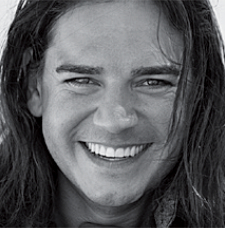


Although the class was taught entirely remotely this opened up other opportunities. For example, the class was able to have zoom dialogues with renowned directors Robert Wilson and Robert Lepage.

Fall 2019 (Graduate Level)
DRA 3907HF: Theatre and Emerging Technologies
CSC 2524: Topics in Interactive Computing
Taught in conjunction with the Department of Computer Science, this course explored applications of emerging technologies in the context of theatre, performance and installation. It was taught by David Rokeby (media artist and Director of the BMO LAB) and Professors Pia Kleber (Drama/Theatre/Comparative Literature) and Karan Singh (Computer Science). Students from Theatre and Performance, Music, Computer Science and Engineering participated. The course involved seminar presentations of readings from both the technical and artistic perspective, research papers, and participation in group productions. In these productions interdisciplinary groups of students worked together interpreting theatrical scenes using technologies such as Virtual Reality, depth cameras, projection and multi-channel sound.

Fall 2018 – Spring 2019 (Graduate Level)
DRA 3907F Collisions and Common Ground – art, technology, performance
This interdisciplinary course explored the collision between the arts and technologies with all of its creative potential, unintentional collateral damage, compelling attraction, and complex social implications. Students hailed from Theatre, Information Science, Music, and Computer Science. The course involved seminar presentations of readings from both the technical and artistic perspective, research papers, and group productions at the end of each term. The students developed, realized and performed scenes adapted from Shakespeare’s Tempest, integrating a variety of interactive technologies.
