When: Oct. 25, Feb. 15, March 2 (5–7pm)
We held a lecture series at the BMO Lab this academic year (2022-3) entitled “Performance Capture – on the margins of the computable.” These events, which ran on Tuesdays or Thursdays from 5-7pm, introduces major thinkers on themes of performance and digital culture to our community through lectures and extended, in-depth conversation (with refreshments!). This year, our speakers will focus on the tenuous compatibility and disjuncture between digital representation and the live body.
Relational Dramaturgies: Co-Producing Spectators, Immersive Spaces and the change of the locus of dramaturgy
Imanuel Schipper – Dramaturg for Rimini Protokoll
October 25, 2022, 5-7 pm
People are walking the street, doing strange things, a theatre audience is discussing greenhouse gas reductions of countries that they do not know exist – these are just two examples of what modern theatre goers are doing. From the “Discovery of the Spectator” (Fischer-Lichte, 1991) to the “Emancipated Spectator” (Rancière, 2009) a lot has changed in the possibilities how theatre is addressing its audience. Productions in urban space and the progression of digital cultures not only in the daily life but also in all fields of the performing arts led to new paradigms in the way shows are experienced and analyzed. The use of space and dramaturgy and the question of how the spectators are included in the performativity of the theatre event in some contemporary theatre productions changed not only the way theatre is produced but obviously has had a great impact on the experience itself.
Within this change there exists also a major shift of the concept of dramaturgy: From an architecture of a textual structure to an enhancement of the work in the field of theatre to mode of being a spectator. Does the audience then lose its critical distance to the piece of work it is looking at? How could “providing an experience” not only be an unpolitical event but produce new perspectives?
This lecture aims to look at that change of concept and its change of loci as a symptom for many aesthetic phenomena and a reordering of the “aesthetic regimes” (Rancière). With the help of some examples of the most recent productions of Rimini Protokoll it will rethink the concept of dramaturgy and reconstruct a different way of how it is produced. With a special focus on the immersivity of these productions it will discuss the pro and cons of formats that asks for co-producing spectators.
Is My Robot Happy? – A History of Movement and Emotion in People and Machines
Whitney Laemmli, Carnegie Mellon University
February 15, 2023
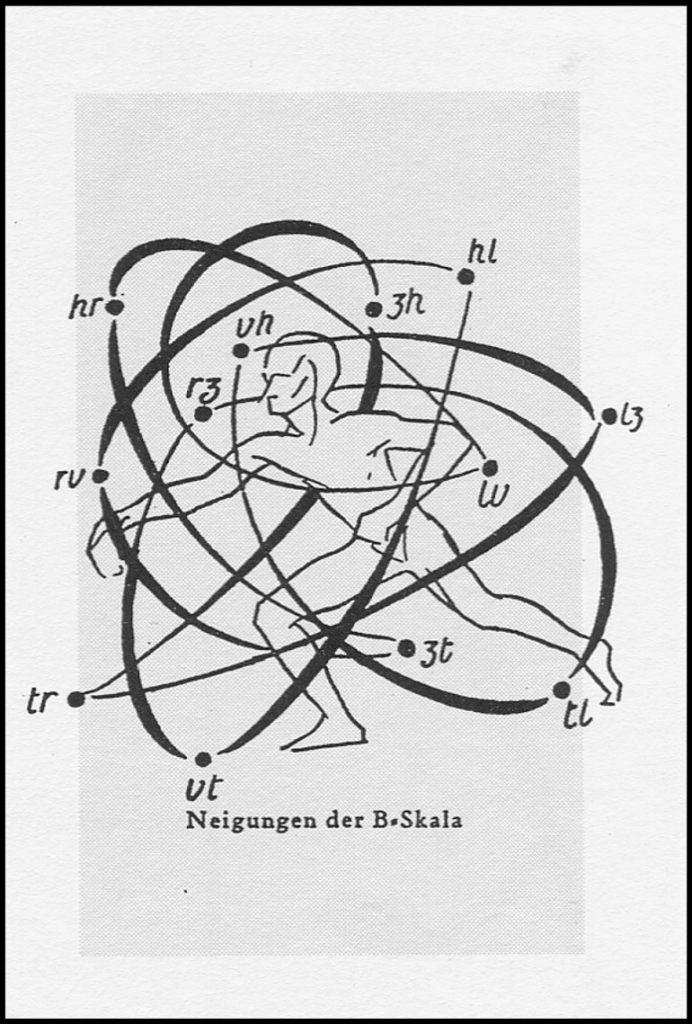
Over the past few decades, an eclectic mix of artists, roboticists, and computer scientists have utilized a notation system called Laban Movement Analysis (LMA) to simulate human movement in their creations. LMA not only categorizes and records the actions of body parts, however, it also links specific kinds of movement to particular emotional states, relying on theories developed by the system’s originator, Rudolf Laban, in the 1920s.
This talk will describe LMA’s origins and trace its history, from its birth in the scientific and artistic ferment of Weimar Germany through its use in the British factories in World War II, to its life in the corporate boardrooms of the mid-century United States and its ultimate appearance in 21st century laboratories. Paying attention to this often-ignored history will shed light on the system’s longstanding appeal as well as the possibilities and dangers that attend its use.
Black Movement in Digital Spaces
LaJuné McMillian
March 2, 2023
In the past few years, access to motion capture data, 3D base models, and software to “make an animation of yourself” has skyrocketed. From MakeHuman to Mixamo to CMU’s motion capture database, the ability to make and finish polished projects has become easier for many. While these resources are extremely helpful to create a range of projects, they lack tools to create diverse characters and movements unexplored by systems that center assumptions of neutrality.
The Black Movement Library (BML) started as an online database of Black motion capture data and Black character base models. However, this approach failed to address the exploitation, erasure, and dilution of Black movement and Black culture historically through appropriation, the evolution of Black face, and the commodification of our existence. BML grew into a space of convening and community building, through workshops (both movement and technology based), performances, XR experiences, conversations, and research on how and why we move.
BML asks how we can better hold each other both online and off, and curate spaces of care, witnessing, archiving, learning, accountability, and being. BMLasks what new (or old) ways of protection we can develop for ourselves and our information outside of copyright law, which does not have our best interest at heart, “individualizing” networks and communities of work (across generations of the Diaspora), thus erasing the true origin of the work – us.
Hello and thank you for the notification.
Please confirm the event dates by e-mail: Jan 26, Feb 2 ,March 2
when available.