• Skip to main content

BMO LAB

Creative Lab for the Arts, Performance, Emerging Technologies and AI

  • Home
  • About
    • A. I., Performance, and the Arts at BMO Lab
  • Highlights
  • Courses
    • Winter 2023
    • Winter 2022
    • Winter 2021
    • Fall 2019
    • 2018
    • Courses Summary
  • Research
  • Events & News
    • Can Stage BMO Lab Residency
    • Diagonal – Speaker Series and Reading Group
    • Radium AI and Art Residence Program: Discovering New Sites of Creativity
    • Events and News Summary
  • Lab
  • People
  • Info
  • Supporters & Partners

Events

Aug 19 2026

BMO Lab Lectures: Fall 2026

Events will take place at the new location of BMO Lab: 

BMO Lab
Room 227,
Centre for Drama, Theatre and Performance Studies,
University College,
15 King’s College Circle
Directions to BMO Lab


September 30, 4.30-6pm

Fabian Offert, University of California – Santa Barbara

Of All Virtues Only One: Theater after Artificial Intelligence

Fabian Offert is Assistant Professor for the History and Theory of the Digital Humanities and Co-Director of the Center for the Humanities and Machine Learning (HUML) at the University of California, Santa Barbara. His research and teaching focuses on the epistemology, aesthetics, and politics of artificial intelligence. His most recent book, Vector Media (Meson Press/University of Minnesota Press, 2026) writes the first comprehensive history and theory of vector space as a space of universal commensurability in contemporary machine learning. Fabian was 2025 Rudolf Wittkower Fellow at the Bibliotheca Hertziana – Max Planck Institute for Art History in Rome and will be Visiting Professor at the University of Marburg’s Center for Digital Culture and Infrastructure in 2026. https://zentralwerkstatt.org/


October 6, 4.30-6pm

Elizabeth Hunter, Washington University, St. Louis

VISIBLE 1.0: Resurrecting a Nineteenth-century Moving Panorama with Mobile AR and GenAI

Elizabeth Hunter is Assistant Professor in Drama, Director of Graduate Studies, and Director of the Fabula(b) Theatre + New Media Lab in the Performing Arts Department at WashU. Her first monograph, Acting the Part: Audience Participation in Performance (University of Michigan Press 2025), offers a new paradigm for understanding how audiences participate in immersive theatre, from physical spaces like the Globe in London to digital spaces like social virtual reality. She is currently working on her next book project, which mounts the first scholarly analysis of digital resurrection—the use of AI and spatial computing to bring back the dead—as performance. Titled, “Death Is Obsolete: Staging Resurrection in the Age of AI,” this project explores how a critical lens of performance theory can illuminate the user roles and production choices inherent in digitally resurrecting all manner of bodies, from the corporeal to the architectural. The theoretical side of Professor Hunter’s research complements her practice-led work as the Director of Fabula(b), where she leads an interdisciplinary team to create digital adaptations of canonical dramas and other famous stories as a mode of historiographic and dramaturgical analysis. The lab’s current project, “VISIBLE: Resurrecting Henry ‘Box’ Brown’s Moving Panorama, ‘Mirror of Slavery,’” is currently in prototyping. https://sites.wustl.edu/fabulab/


October 14, 4.30-6pm

Kenneth Collins, Temporary Distortion and the University of Utah

Silicon and Carbon: Computational Chamber Theatre

Kenneth Collins works in the gray space between the “black box” of theatre and the “white cube” of the art gallery, creating projects at the intersection of visual art, digital media, theatre, cinema, and artificial intelligence, investigating questions of authorship, embodiment, and human expression in the age of generative media. His practice encompasses sculpture, video art, installation, performance, and synthetic media works that challenge the traditional boundaries between disciplines. He is the founder and artistic director of Temporary Distortion (2000-present), named one of the “Best New York Theater Companies” by TimeOut NY Magazine, and his work as a visual artist has been exhibited internationally. Collins currently serves as an Assistant Professor in the Department of Film and Media Arts at the University of Utah, where he is a Responsible AI Initiative (RAI) Faculty Fellow and holds a shared-faculty appointment with the Scientific Computing and Imaging (SCI) Institute. In Fall 2023, Collins became the first professor at a major university to develop and teach a dedicated course in AI Filmmaking. https://www.temporarydistortion.com/


October 21, 11am-1pm ***note change in time

Liz Santoro and Pierre Godard, Le Principe d’Incertitude

Artists’ Talk & Presentation

American choreographer and dancer trained at the Boston Ballet School, Liz Santoro studied neuroscience at Harvard University before embarking on a career as a performer for a number of experimental dance artists in New York. This path led her to a somatic research on the “performative body,” which remains the main driving force behind her own creation projects and collaborations with LPDi.Since the creation of their company Le principe d’incertitude (LPDi) in 2011, Liz Santoro and Pierre Godard have been collaborating closely together to build choreographic machines that try to thwart the habits of our attention. The singularity of their respective paths has led them to develop systems of creation centered on movement and text which, by revealing their underlying processes – mechanisms of power and seduction, organization of the social space, operating modes of the nervous system – offer the spectator an experience of a perceptual interaction where looking becomes an action that provokes a reaction. Their work has been presented in France, Europe, North America and Asia. They have created various group pieces, We Do Our Best (2012), Relative Collider (2014), For Claude Shannon(2016), Maps (2017), Noisy Channels (2018, 2019), Stereo (2019) as well as in situ pieces such as Watch It (2012), Quarte (2014), FCS Redux (2017, 2018), Mass over Volume (2017) andLearning (2018, 2019). Watch It received a Bessie Award in 2013 in the category “Outstanding Production for a work at the forefront of contemporary dance.” Pierre and Liz were the associated artists at the CDCN / Atelier de Paris from 2016 to 2018. www.ldpi.org


If you have any questions, please feel free to reach out or to consult information on the BMO Lab website. We look forward to seeing you in the Lab this fall!

Written by David Rokeby · Categorized: Blog, Events

Aug 18 2026

Diagonal Reading Group

Started in 2021, Diagonal examines creative A.I. from a full radius of angles: as a political problem, an industrial tool, a philosophical challenge, a collaborative construction. Diagonal draws Toronto academics, engineers, and creators together to discuss and debate the latest scholarship on machine learning, charting a diagonal path across disciplinary methods and objects. Where possible, readings and discussions are related to public lectures and events.

Reading group meetings are held in person in the BMO Lab (The new location in University College), with remote participation possible over zoom.


2026-2027 Calendar


September 25, 3 to 4.30pm:
Leonardo Impett and Fabian Offert, Vector Media, 2026

Cover of 'Vector Media' by Leonardo Impett and Fabian Offert

October 23, 3 to 4.30pm:
Hito Steyerl, Medium Hot: Images in the Age of Heat, 2025

Cover of “Medium Hot: Images in the Age of Heat”

November 20, 3 to 4.30pm:
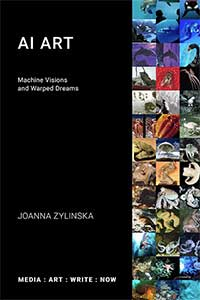
Joanna Zylinska, A.I. Art: Machine Vision and Warped Dreams, 2020


January 22, 3 to 4.30pm:
Philip Agre, Computation and Human Experience, 1997


February 26, 3 to 4.30pm:
Trevor Paglen, How to See Like a Machine, 2026


March 26, 3 to 4.30pm:
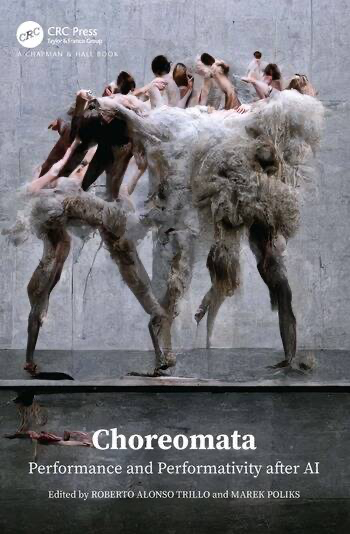
Selections from Choreomata: Performance and Performativity after AI, 2024


April 22: 
TBD

Written by David Rokeby · Categorized: Blog, Diagonal, Events

Aug 13 2025

Welcome Professor Sarah Bay-Cheng!

The BMO Lab is thrilled to announce that Sarah Bay-Cheng will join the Centre for Drama, Theatre and Performance Studies on July 1, 2025 as Professor of Emerging Technologies in Theatre and Performance and the Helen and Paul Phelan Chair in Drama. As an outstanding and field-shaping scholar, Professor Bay-Cheng will bring exciting research, collaboration, and pedagogical innovation to our department. In this position, Sarah will be an integral part of the BMO Lab team.

Sarah Bay-Cheng

Sarah Bay-Cheng, PhD is Professor of Emerging Technologies in Theatre and Performance and the Helen and Paul Phelan Chair in Drama at the Centre for Drama, Theatre & Performance Studies, University of Toronto. A former Fulbright Scholar at Utrecht University, her research explores the intersections of theatre, performance, and digital technologies, examining how historical practices in media inform contemporary performance and culture. She has published four books, including Performance and Media: Taxonomies for a Changing Field (co-authored, University of Michigan, 2015) and Mapping Intermediality in Performance (co-edited, University of Amsterdam Press, 2010). She edited the book series, Avant-Gardes in Performance and has published over 75 essays, chapters and reviews.

Her current research projects include Digital Historiography and Performance: Introductions & Provocations (University of Michigan Press), “AI in Performance-making: New Frontiers in the Humanities” Contemporary Theatre Review, co-edited with Liam Jarvis and Aneta Mancewicz, and new work on data in creating impact frameworks for arts organizations and researchers. 

Previously, Bay-Cheng served as the Dean of the School of the Arts, Media, Performance & Design and as Department Chair of Theatre and Dance at Bowdoin College. In 2012, she founded the Technē Institute for Arts and Emerging Technologies, and graduate programs in Theatre and Performance at the University at Buffalo. She is a founding co-host for On TAP: A Theatre and Performance Studies Podcast, and can be heard there occasionally. 

Beyond scholarship, Bay-Cheng has worked as a director and dramaturg with a focus on intermedial collaborations and a fondness for puppetry. 

Written by David Rokeby · Categorized: Blog, Events

Aug 13 2025

Algorithmic Millennium: Creating Staged & Digital Games – Feb 4, 2025

Winter Keynote Lecture
  
Natalie Tin Yin Gan & Remy Siu
of Hong Kong Exile & Sunset Visitor
in conversation with Dr. Doug Eacho

Tuesday, Feb. 4, 2025, 5-7pm

Audio recording of the presentation:

BMOLab · Algorithmic Millennium: Creating Staged & Digital Games – Hong Kong Exiles at BMO Lab

What does experimental performance have to do with video games? How do emerging media provide new landscapes for diasporic narratives? How can live and digital bodies perform and resist algorithmic control? The BMO Lab’s winter keynote will explore these questions and more with two of Canada’s most exciting young artists: Natalie Tin Yin Gan and Remy Siu, of the multimedia performance collective Hong Kong Exile and the video game company Sunset Visitor. Their conversation with Dr. Doug Eacho aims to explore transpacific politics, vocal performance, motion capture, the state of electronic dance music, uses of allegory, anime fashion… at least.  
 
Since 2011, Hong Kong Exile’s interdisciplinary works such as Foxconn Frequency (no. 3), No Foreigners, and Visitors from Far Away to the State Machine have performed across Canada and in New York, the United Kingdom, the Netherlands, Hong Kong, and Singapore.
 
Sunset Visitor 斜陽過客 ’s debut narrative science-fiction game, 1000xRESIST (2024), appeared on nearly 80 ‘game of the year’ lists from major outlets like NPR, Polygon, and Paste. The game was praised as “a revolution in storytelling” (IGN), “one of the best stories in the medium” (Paste), and “an extraordinary piece of work – one that places diasporic trauma front and centre” (Eurogamer). It was nominated for three awards at the Independent Game Festival and seven Canadian Game Awards.
 
Natalie Tin Yin Gan 顏婷妍 is an independent choreographer, interdisciplinary artist, and writer. Remy Siu 蕭逸南 is a composer and new media artist. Both work on the unceded, ancestral, and occupied lands of the Coast Salish peoples.

Written by David Rokeby · Categorized: Blog, Events

Jan 24 2025

Beyond the Pose: Towards an Interdisciplinary Understanding of Dynamic Human Movement

We are, as an interdisciplinary team comprising members from Performing Arts, Computer Science, Kinesiology, and Inclusive Design, developing methods for improving the representation and interpretation of human movement—in all its diversity—to enable a richer, more embodied, and more equitable presence for bodies of all sorts in engagements with machine learning systems.


THE CHALLENGE: How we are situated in the world within our individual bodies defines much of our experience and agency as humans. We navigate the world with purposeful movements and expressive gestures involving joints and muscles working in complex synergies. As we become increasingly surrounded by machine learning (ML) systems, it is essential that these systems be sensitive and responsive to the nuances of our actions. How our movements are represented within ML systems will significantly determine our experience of being in the world: how our embodied presence is accommodated and valued in our increasingly ML-mediated lives.

Many recent ML advances lean heavily on enormous pools of digitized text, image and sound. When vast amounts of data are available, a sufficiently large model given enough training develops surprisingly rich representations of salient features present in the dataset (if they prove useful in achieving its learning objective). Human motion is commonly represented with ‘kinematic’ data: sequences of geometric poses, based on joint angles and positions of limbs, absent any explicit markers of dynamics and physical embodiment. Given enough kinematic data, an ML model should learn some approximation of the interplay of muscles and joints, and of relevant laws of physics (gravity, momentum, balance). But such data is not available or accessible in such quantities. Data representing movements most relevant to our communities of performers, people of diverse racial background, and people with disabilities or injuries is much scarcer. (The data that exist tend to overrepresent white males) We must find other ways to guide ML systems to take physical rather than just geometric factors into account. Kinesiologists often gather force, torque, and muscle activation sensor readings, but usually only for specific muscles and joints. No significant dataset including such data for the whole body exists.

There are long standing debates in the humanities about whether it is possible to capture or notate the culturally significant qualities in movement at all, or whether such ‘capture’ inevitably flattens the di- mensions of movement according to the priorities of a dominant culture. Historians of technology have documented the historic drive to reduce human experience to quantifiable parameters [39,40,41].

ML research deals in the currency of quantitative evaluation: accuracies, log likelihoods, FID scores, and other defined metrics. There can be a hard-to-articulate disconnect between quantitative scores and related qualitative observations. As ML is involved in more and more human activities there is an urgent need and an extraordinary opportunity to engage experts in subjective evaluation to help shape new approaches ML practitioners can apply in these domains, ways of integrating crucial information that might appear too “soft” or “subjective” for a typical ML researcher to prioritize.

Our project will bring a critical, multidisciplinary lens to the question of what is at stake in the quantifi- cation of human movement. This is urgently needed because ML systems are increasingly operating in the human world, in real-time, providing virtually instantaneous feedback. The ways we are fed back to ourselves through our technological environment indelibly mark our sense and understanding of ourselves, ultimately profoundly shaping our culture.

INTERDISCIPLINARITY: Human movement can be considered, analysed, perceived, and experienced in myriad ways: as a source of pain or pleasure, as expressive of intention, as cultural artifact, as an in- dicator of physical health or injury, as an expression of unique abilities and disabilities, and as a reflection of intricate reciprocity between human and the environment. While these aspects can be treated in isolation, they are profoundly entangled. The high stakes of determining how we register as physical be- ings in ML systems require that we work together across disciplines to acknowledge that entanglement.

In the performing arts, human movement is considered in terms of expressiveness, aesthetics, poli- tics, and intent. The history of attempts to inscribe human motion in dance notation provides a unique historical perspective on motion capture [1,2,3,4].

Performing artists are attuned to the expressive and aesthetic implications of their movements and to connect these to their embodied experience. They can provide invaluable research feedback providing a necessary complement to the inherently quantitative approach of ML. On the other hand, the internal representations that ML systems learn are often rich in nuance and ambiguity, seeming to blur the dis- tinction between quantitative and qualitative (though often hard to interpret).

Kinesiology adopts a largely quantitative perspective, but with explicit grounding in the body, its cog- nitive and neuromuscular mechanisms, and an attention to physical forces bearing on the body.

Focused on performance and learning, injury and its reduction, physiotherapy, and rehabilitation, re- search concerns in kinesiology complement and occasionally overlap those in the performing arts.

ML systems are intended to map the entire field of possibilities of the data they have trained on, to be inclusive as it were, but risk performing poorly in response to edge cases. Inclusive Design explicitly ad- dresses the challenges faced by people who appear as edge cases to norm-focussed systems and de- signs. It rejects the deficit framing of non-normative movement and demands that non-normative bodies and movements remain legible within ML systems. To achieve this goal, people with disabilities need to be engaged as active partners, not just subjects.

We will draw these contrasting yet complementary perspectives into conversation, seeking a broad, interdisciplinary understanding of what is at stake as human movement increasingly becomes a subject of ML, as a foundation for our explorations of human motion in ML systems.

RESEARCH OBJECTIVES: Our primary research objective is inherently interdisciplinary, and as such it can be interpreted from multiple perspectives: our focus is to find ways to improve the representation of dynamic human movement in ML systems that embrace and address the full human range of movements and bodies, especially those at or beyond the edge of the normative. We seek to design ML systems that can be trained to engage with and respond to physical movement in all its expressive dynamic dimensions (distinct from functional gesture recognition); to the best of our knowledge, this is a truly novel perspective.

PRIOR WORK: There is, however, extensive and applicable related research. Computer animation researchers have developed methods for improving the quality of kinematic motion data by learning to mimic captured motion within a simulated physics environment, inferring muscle activations and other physical forces required to produce a physically plausible reconstruction of the movement, filtering out noise that is inconsistent with physics. We will explore using such techniques to infer how physics bears on the body, both to improve ML training results on limited data and for use in real- time human-computer ML interfaces. Antoine and others have applied wavelet analysis to cal- culate the spectral components of movement data, producing a dynamic movement signature, poten- tially allowing us to situate each frame of kinematic data in gestural trends across multiple time scales.

Large language models can predict motion by converting poses into distinct tokens and then gener- ating plausible sequences. Oore’s team has explored the use of such methods by pre-training a language model on a large general motion dataset and fine-tuning on a small clinical dataset.

We are inspired by ground-breaking work in Inclusive Design examining challenges ML poses to people with disabilities, spearheaded by collaborator Jutta Treviranus. ML has been thoughtfully applied to customize interfaces for people with disabilities. There is also rare, and inspiring work on modelling graphic representations of non-normative human bodies.

Perception of biological motion has been explored extensively in kinesiology, and most relevantly for us, collaborator Wang and others have examined the dynamic features of movement that serve as cues of intention and emotion, and the role of physical forces (e.g. gravity) in this context .

TEAM:

David Rokeby brings a history of working with computational approaches to human movement in the visual and performing arts, is experienced in visualizing and sonifying motion data, and has collaborated on multiple Inclusive Design projects over the past 30 years.

Sageev Oore brings to the project an interdisciplinary perspective with grounding in both founda- tional machine learning and its applications for human time-series data (from movement to speech), and an awareness of the need for humanities-based contributions to this area.

Douglas Eacho is a performance historian with a special interest in the confluence of computation and dance. He provides the project expertise in philosophical discussions of dance and media which can emphasize the stakes of the team’s findings.

As a dancer, Director of the Institute of Dance Studies, and as a scholar of black dance in Canada, Seika Boye brings to the project a broad knowledge of dance both as an embodied practice and as a subject of scholarly research.

Research into the history of dance notation, and critiques of notation systems will provide us with a performing arts perspective on capturing and representing choreography. Related research examines the lack of archives or museums of human movement, and the resistance to the possibility of notating dance, or highlights the importance of embodied cultural memory. Norman and others directly address issues around technological motion capture in the arts.

Tim Welsh, Tim Burkhart, and Xiaoye Michael Wang bring expertise in the dynamics of human movement, its health and performance implications, and the cognitive and neural mechanisms behind it. They also contribute technical background in motion capture, kinematic analysis, and signal processing.

Jutta Treviranus brings deep expertise in Inclusive Design, strong connections within the disability community, and a research focus on the challenges that ML presents to people with disabilities.

Spirit Synott brings to this project her invaluable lived experience as a dancer who uses a manual wheelchair for mobility, as an activist and as expert in inclusive design.

Balazs Kegl brings extensive expertise in ML, including physics-based pipelines and micro-data.

Written by David Rokeby · Categorized: Blog, Events

  • Page 1
  • Page 2
  • Page 3
  • Interim pages omitted …
  • Page 8
  • Go to Next Page »

copyright - BMO Lab for Creative Research in the Arts, Performance, Emerging Technologies and AI